
Preparing for a World in Conflict: King's Students Study Peacebuilding in Italy
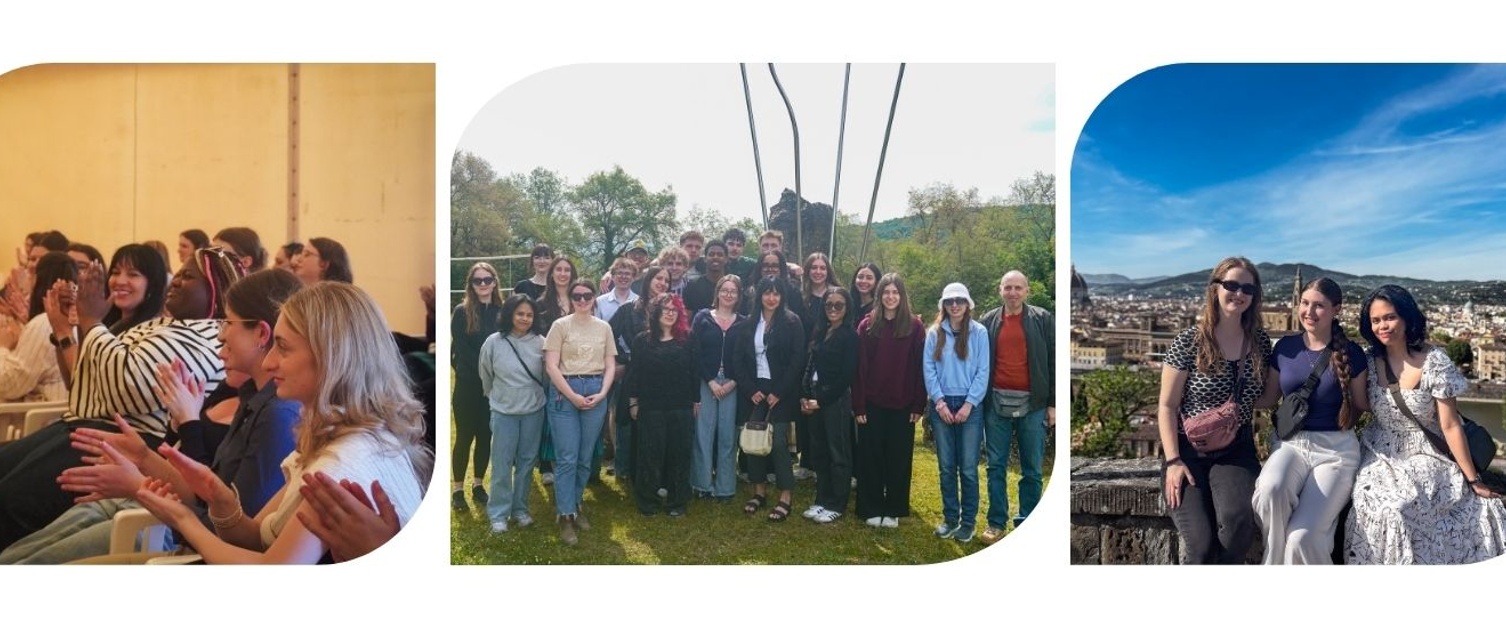
King’s students are currently in Arezzo, Italy, taking part in the King’s at Rondine Seminar in Human Rights and Peacebuilding, a month-long experiential learning program at Rondine Cittadella della Pace. There, they are learning alongside youth from regions currently experiencing conflict, exploring how dialogue, relationship-building, and shared experience can open pathways toward more resilient peace.
This year marks the 10th anniversary of the seminar, reflecting a sustained commitment to experiential learning and preparing students to engage meaningfully with conflict in an increasingly complex world.
“The tenth anniversary of the King's at Rondine Seminar is a remarkable milestone,” said Dr. Allyson Larkin, Chair and Associate Professor in Social Justice and Peace Studies at King’s. “Conflict and peacebuilding are more critical for human societies today, potentially more than ever.”
The approach to conflict transformation in the Rondine program is distinct. Unlike traditional approaches that focus on political or institutional solutions, it examines conflict through a social and psychological lens. Students are challenged to understand the histories, cultural perspectives, and lived experiences that shape division, and to deconstruct the narratives and experiences that have fostered hatred and violence.
The first question participants are asked is, "How do we learn to live with our enemies?" Through workshops, simulations, and daily interactions, students are immersed in an environment where dialogue is continuous and differences are not avoided but engaged directly. The experience asks them to sit within tension and uncertainty, building the skills needed to navigate complex human relationships in real time.
A defining strength of the seminar is its interdisciplinary approach. Led by King’s faculty, the program brings together perspectives from Social Justice and Peace Studies, Childhood and Youth Studies, Management and Organizational Studies, and Religious Studies. This range allows students to examine conflict through social, cultural, historical, and organizational lenses, deepening their understanding beyond any single discipline.
King’s students are also joined by peers from Western and other institutions, creating a diverse learning environment shaped by a range of academic backgrounds and lived experiences.
The timing of this year’s seminar adds another layer of significance.
“This year is particularly important given the ‘rupture’ that is dismantling the global rules-based order,” said Larkin. “As the world continues to face greater uncertainty and instability, the skills and strategies students will learn carry even greater significance.”
While the seminar takes place in Italy, its relevance is close to home. Communities across Canada are experiencing increasing polarization and a rise in hate-related incidents, underscoring the importance of preparing graduates who can engage thoughtfully and constructively with difference.
“It is crucial that we prepare leaders who are not just equipped with skills to advance a singular social/political agenda but rather who have the skills to work within increasingly complex social and cultural conditions,” said Larkin.
For MK Mondano, a third-year student completing an Honours Specialization in Social Justice and Peace Studies, that learning has come through the daily practice of listening, reflection, and exchange.
“Having the chance to study conflict resolution in another country while living with people from different walks of life gave me a whole new perspective,” said Mondano. “Rondine is showing me that everything comes down to dialogue and community. We can’t avoid conflict, but what really matters is our willingness to actively listen and truly welcome different perspectives.”
By the end of the program, students will return with more than a deeper understanding of global conflict. They will carry a clearer sense of what it means to engage with conflict in meaningful and human ways, an understanding shaped not only by what they have learned, but by how they have lived it.
Listen to the CBC London Morning interview with Dr. Allyson Larkin and student Kate Grafton.