
King's student advances community-driven solutions to Thames River pollution
This year’s Earth Day theme, “Our Power, Our Planet,” reminds us that meaningful environmental progress is driven not by a single moment, but by the collective actions of communities working together to protect the places we live, learn, and call home.
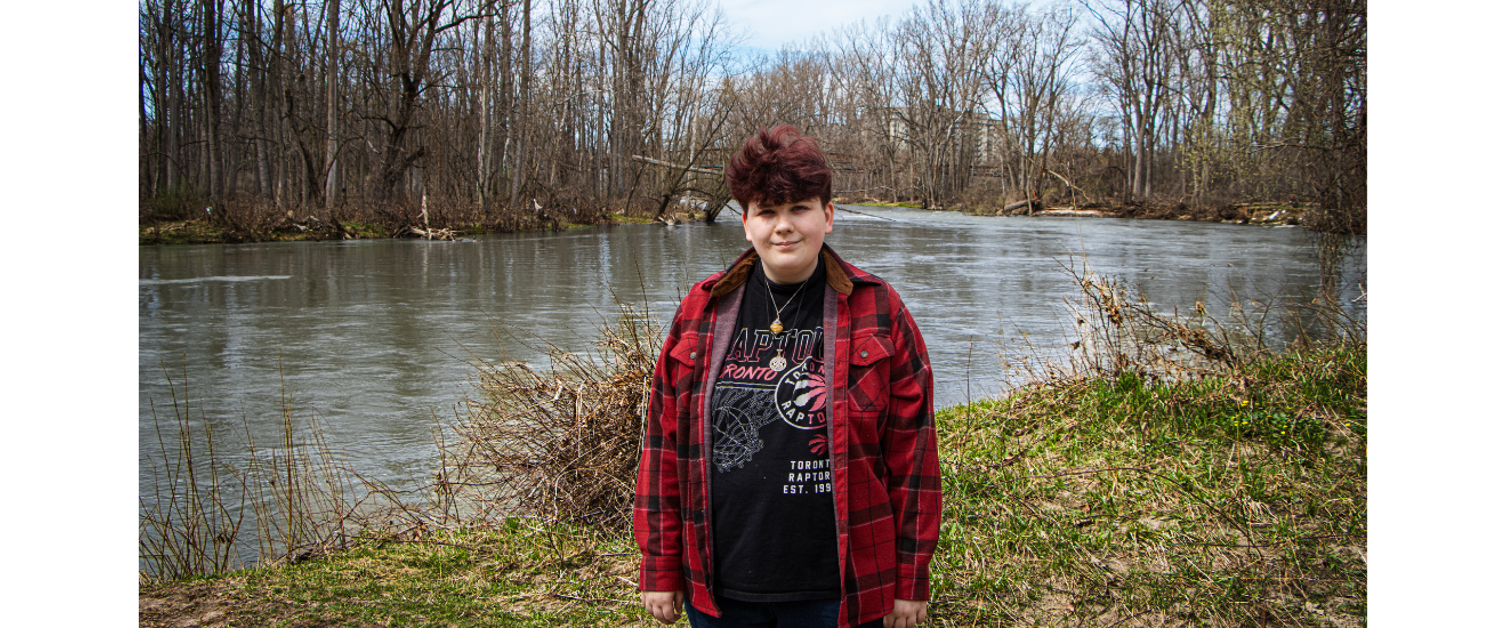
For King's student Emily Dell, that belief has taken shape through research, advocacy, and a commitment to community-centred change. A third-year student pursuing an honours double major in Sociology and Social Justice and Peace Studies (SJPS), Dell earned the top award at the recent SJPS Community Impact Symposium Showcase during King’s Research Week for their project, “Macro-Level Policy Approach to Address River Pollution in the Thames: Shifting Focus to Commercial Pollution.”
As London faces an ongoing pollution crisis in the Thames River, compromising the right to a clean environment and the right to clean water in our community, their work focuses on enforcing waste restrictions and developing stricter recycling and composting guidelines for commercial businesses.
The framework takes a multi-pronged approach: targeting the sources of litter through improved by-laws, encouraging businesses to adopt corporate social responsibility practices, and exploring the development of business improvement areas. It also acknowledges the complexity of river pollution by including recommendations related to encampments and individual park use, with the goal of ensuring solutions are inclusive and grounded in the realities of the community.
Dell hopes to present these recommendations to London city councillors, recognizing that even incremental progress contributes to long-term change and creates momentum for future advocacy.
That commitment has been shaped by meaningful engagement beyond the classroom. Through their involvement with the London Environmental Network and contributions to the Antler River Rally, Dell witnessed firsthand the dedication of Londoners working to improve environmental conditions while advocating for vulnerable populations. Those experiences reinforced their interest in developing solutions that support and strengthen community efforts already underway.
“You don't have to be an academic to make a change,” said Dell. “Go out to your community, see what is already being done, and help with the issues that matter to you. Change is not made by individual actions but through community.”
Guided by mentors like Dr. Klaire Gain and Shawna Lewkowitz, Dell has connected academic learning with real-world impact in a way that reflects King’s commitment to stewardship and to developing ethically grounded changemakers who serve the common good.