
King's researchers highlight the economics of autism
King’s faculty is bringing economic expertise to a national conversation about the financial realities facing families raising autistic children in Ontario and across Canada.
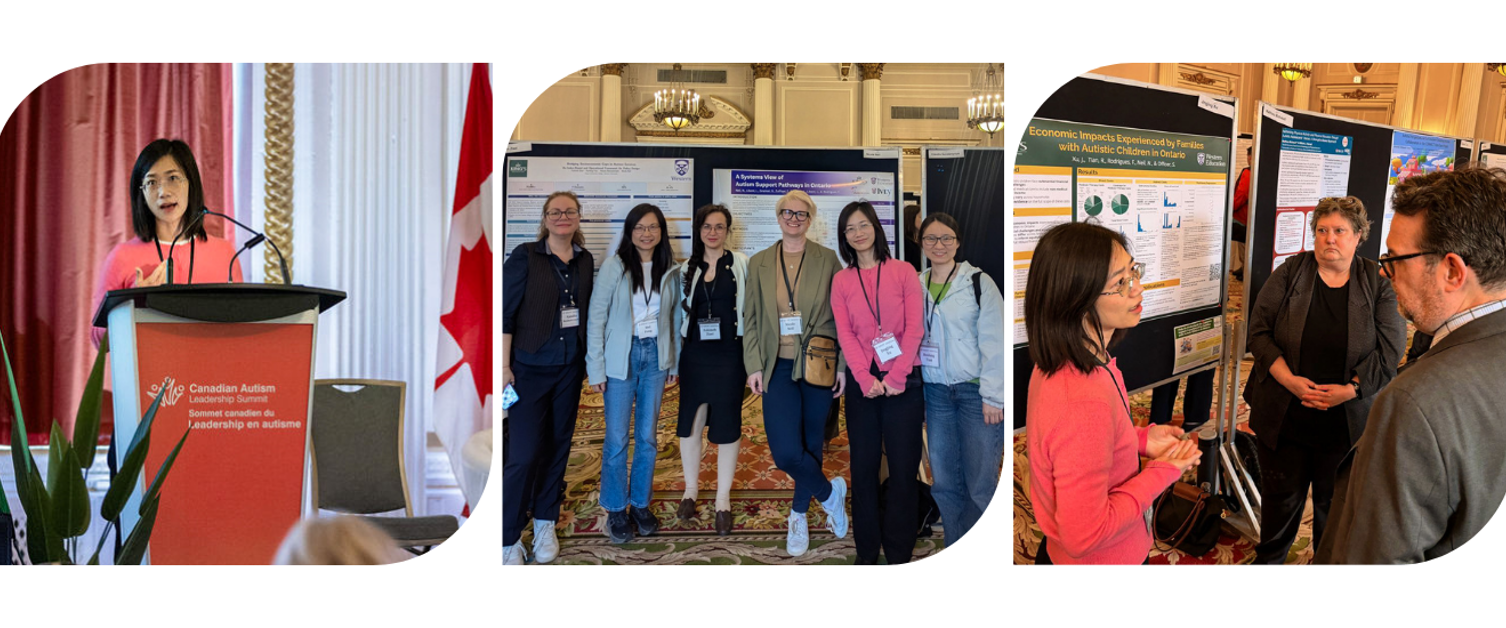
Dr. Jingjing Xu, Assistant Professor of Economics in the School of Management, Economics, and Mathematics, recently attended the Canadian Autism Leadership Summit (CALS) in Ottawa alongside colleagues Dr. Renfang Tian, Dr. Natalia Bezmaternykh, and Dr. Hui Feng. Held from April 14 to 16, CALS brings together Autistic self-advocates, families, researchers, policy makers, service providers, and community leaders from across the country to share insights, inform policy discussions, and strengthen the autism community.
At the summit, Xu and her colleagues shared research that applies economic analysis to pressing questions about autism supports, family financial pressures, and service access across Canada. The work is part of a broader King’s research collaboration with Dr. Renfang Tian, Dr. Natalia Bezmaternykh, Dr. Hui Feng, and Dr. Felipe Rodrigues. One project examines the economic impacts experienced by families raising autistic children in Ontario, while the other explores provincial disparities in autism support services across Canada.
Xu also delivered a separate conference talk titled “The Economics of Autism: Emerging Evidence on Economic Impact and Service System Redesign.” Her presentation explored Ontario-based evidence on the financial and employment impacts experienced by families, including medical and therapy costs, increased living expenses, specialized education needs, and the effects caregiving responsibilities can have on employment.
The talk also considered how economic evidence can support more effective and sustainable service system design, particularly as governments, service providers, and community organizations continue to examine how best to meet the needs of autistic children and their families.
“To our knowledge, this was one of the first CALS sessions to focus specifically on the broader economic impacts on families raising autistic children,” says Xu. “The response showed how important it is to better understand these experiences and ensure they are part of the wider autism policy conversation.”
The research generated strong interest from families, community members, service providers, and researchers in attendance. Several participants noted that while the emotional, developmental, and service-access challenges facing families are often discussed, the economic realities are less frequently examined.
For Xu, that response reinforced the need for continued research in an underexplored area with direct implications for families and policymakers.
“Many attendees emphasized that the financial pressures families face are often overlooked,” says Xu. “There is a clear need for more evidence that can help inform policy, improve access to supports, and contribute to service systems that are more responsive to families’ real experiences.”
The conference presentations reflect the School of MEM’s growing contribution to research that connects economic analysis with urgent social and policy questions. Through their work on autism, family financial pressures, employment impacts, and service-system disparities, King’s faculty are helping bring evidence-based insight to policy conversations that affect families across Canada.