
"Love is a universal teaching": Tanya Talaga at King's
“Love is a universal teaching,” says Tanya Talaga, reflecting on the Anishinaabe Seven Grandfather Teachings. “The seven teachings, I believe, might be used by anyone. It doesn’t matter if you’re Indigenous or not. Think about your homes and communities and apply these teachings in your life.”
That idea was at the centre of Talaga’s September 24 lecture at King’s University College: that confronting difficult truths and histories must be accompanied by teachings that offer a way forward.
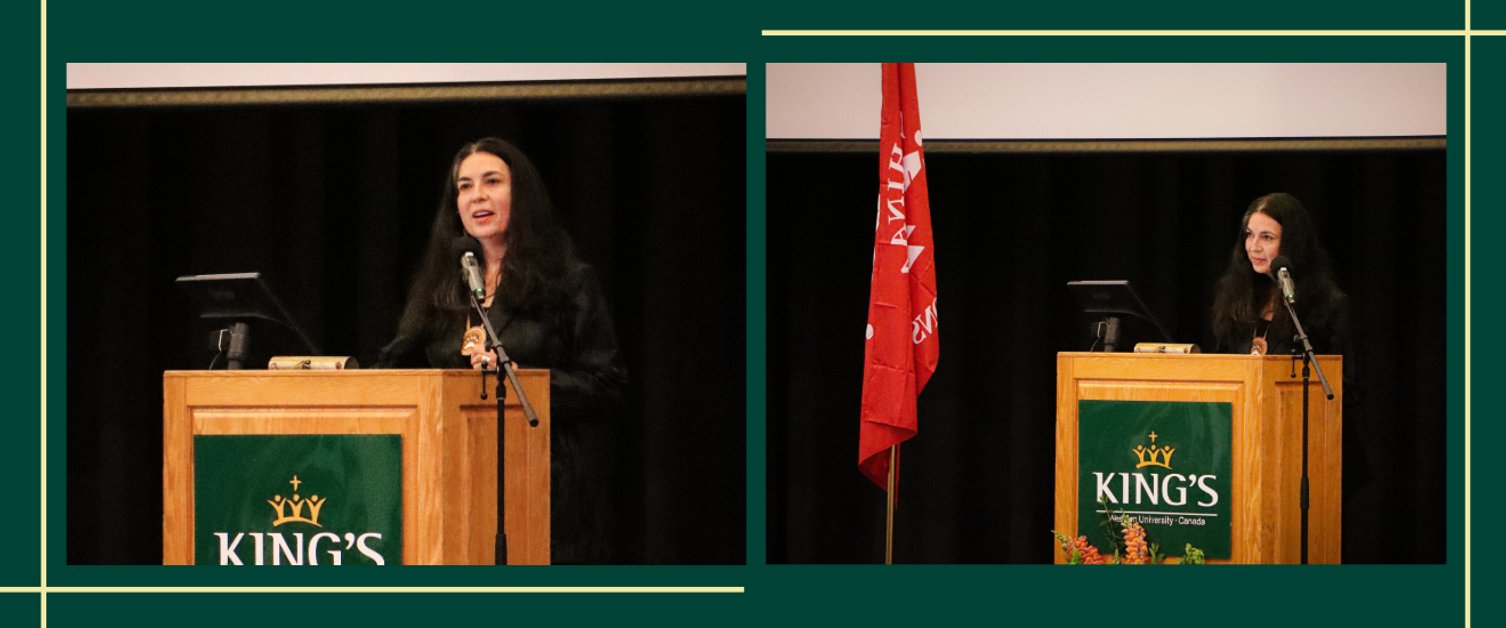
The award-winning Anishinaabe journalist and author, whose books include Seven Fallen Feathers, spoke to an audience of almost 400 in the Joanne and Peter Kenny Theatre at the Darryl J. King Student Life Centre. The President’s Lecture, sponsored by the Sisters of St. Joseph, opened this year’s Veritas Series, organized around the theme The Courage of Encounter.
Sister Margo Ritchie, Congregational Leader of the Sisters of St. Joseph, offered the land acknowledgement. Talaga later noted the significance of Ritchie’s presence, speaking about members of her own family who had attended St. Joseph’s Indian Residential School in Fort William. Dr. Christy Bressette, Western’s Vice-Provost and Associate Vice-President (Indigenous Initiatives), also offered opening remarks.
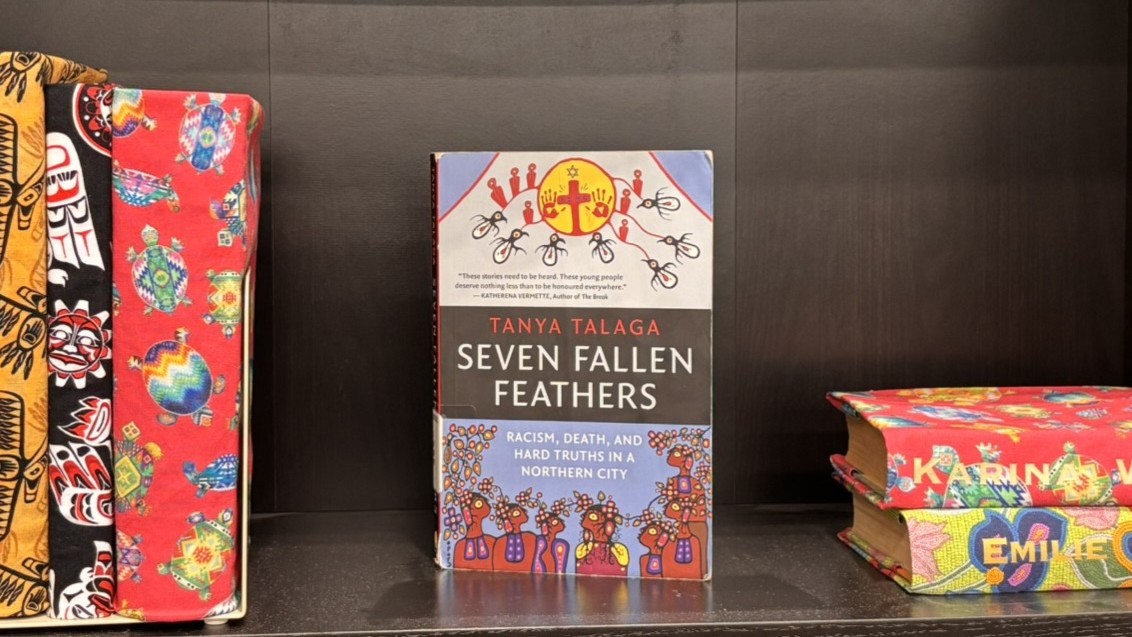
Talaga’s lecture included harrowing testimony drawn from her work, particularly Seven Fallen Feathers, which tells the stories of seven Indigenous young people who died in Thunder Bay between 2000 and 2011.
She spoke about her experience as an Indigenous woman and journalist when she realized that the deaths, and questions about the police response, were not receiving widespread media attention. Talaga went on to report extensively on the deaths and the circumstances surrounding them, work that became the basis for Seven Fallen Feathers, winner of awards including the RBC Taylor Prize and the Shaughnessy Cohen Prize for Political Writing.
At the King’s event, Talaga spoke matter-of-factly about the experiences of Indigenous people in Canada, from the race-based Indian Act, passed in 1876 and still affecting lives profoundly today, to access to clean water, education and places of safety. She pointed to issues still in the news, the continuing lack of action on the Truth and Reconciliation Commission’s 94 Calls to Action, and residential school denialism, which she said she encounters daily.
“Acting from a place of love isn’t always easy, especially if you are living in a country that erases you, your family and your community every day,” Talaga told her audience.
Her remarks drew in part on the book she is currently writing, Seven Grandfather Teachings. Talaga took the audience through respect, humility, love, honesty, bravery, wisdom and truth, explaining each teaching and its representation in the animal kingdom.
“The eagle teaches us about love,” she explained. “When the Creator put the animals together and asked them how they would help humans, it was the eagle who said, ‘I will teach them love.’”
Talaga gave that teaching a human dimension through the story of Elder Sam Achneepineskum, from Marten Falls First Nation. Love takes many forms, she said. Achneepineskum, a survivor of three residential schools, became Talaga’s friend and mentor after they met during the inquest into the deaths of the seven young people in Thunder Bay, where he provided spiritual guidance and support to their families.
“His road to love and his road to peace has not been an easy way,” Talaga said. “I know for a fact that he works on it every single day and that his own motivation, his own sense of love, comes from these teachings.”
Achneepineskum, she explained, is a cousin of Chanie Wenjack, the 12-year-old residential school victim at the centre of Secret Path, the book and music project led by Tragically Hip singer Gord Downie during the final years of his life. In October 1966, Chanie died of exposure while attempting an impossibly long walk home from the Cecilia Jeffrey Indian Residential School.
This, and other parts of his story, embody the difficult histories Talaga asked the audience to confront directly.
King’s President Dr. Robert Ventresca connected the evening’s themes to the role and responsibilities of universities and to Truth and Reconciliation.
“The series, and its theme, The Courage of Encounter, is about being willing to confront difficult histories, engage with challenging and unsettling questions, and listen openly to perspectives that deepen our understanding of ourselves, our institutions, and our country. Learning begins with encounter, and encounter requires courage,” says Ventresca.
“As president and as a historian, I believe educational institutions have a particular responsibility in this process. Our role is to teach this history honestly, including the history and legacy of residential schools, and to examine the consequences of institutional failures at many levels, from governments and churches to educational institutions.
“We must also create opportunities for thoughtful dialogue about their continuing impact. We know these are challenging conversations. Yet helping students engage with difficult questions, weigh evidence, and learn from different perspectives is at the heart of what universities do. That is how we deepen understanding, and how reconciliation can move forward.”
For many members of the King’s community, the encounter with Talaga’s work had begun before she entered the theatre.
Students, faculty and staff had taken part in One Book, One Campus, Many Perspectives, a campus-wide gathering centred on Seven Fallen Feathers. On September 18, members of the community met in facilitated small groups to discuss the book, with Indigenous Knowledge Keeper Mary-Anne Kechego among the facilitators. Kechego also offered opening remarks at the Veritas lecture, sharing her background, experiences and work in the community.
Throughout the evening, Talaga brought the audience back to the theme of love, presenting it as a teaching for how all people might live. She invited everyone to apply the Seven Grandfather Teachings in their homes and communities, calling back to the stories of the young people in Seven Fallen Feathers as a reminder.
As King’s recognizes the National Day for Truth and Reconciliation, that invitation extends beyond September 30. Reconciliation requires continued learning, listening and a willingness to confront difficult truths, not only on days of recognition, but in the choices people and institutions make throughout the year.