
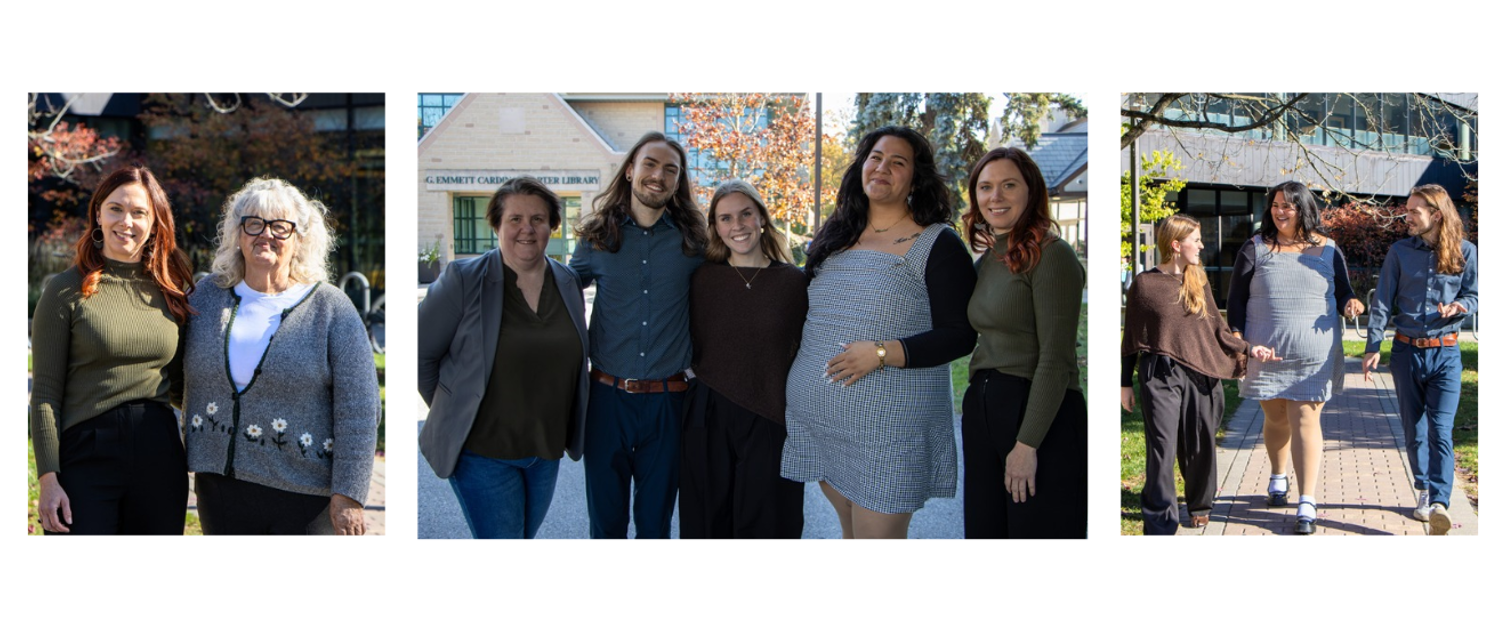
King's Marks 50 Years of Education Focused on Death, Grief and Loss
King's University College is marking 50 years of Thanatology education as home to North America's only undergraduate degree program in the field. With more than 30 courses exploring loss, grief, dying and death, the program helps students understand experiences that shape their own lives and the lives of those around them.
Dr. Lisa McLean, program coordinator and director of the Loss Lab, says the program offers a comprehensive education in how death, grief and loss affect people's lives and how society shapes those experiences. Around half of the courses focus on social, cultural and political dynamics, while others examine personal and interpersonal experiences, including principles of palliative care, grief theories and creative modalities for coping with loss.

For McLean, the value of that education includes how students understand their own experiences and respond to others.
Bailey Rowell, a fourth-year King's Scholar pursuing a double major in Thanatology and Psychology and president of the King's Thanatology Club, was drawn to the program because it offers “language to describe my experiences and permission to acknowledge and process losses.”
“I was surprised by how many different types of loss there are,” she says. “We often think of death and breakups, but grief can accompany any major life change. For example, graduation is a loss; you're saying goodbye to people, a place, a routine, a phase of life. It's a proud and happy moment, but grief is there too, which is perfectly natural.”
Rowell says studying Thanatology has made her a more understanding, open-minded, and empathetic person. “I like to debunk the myth that grief follows five linear stages, ending in acceptance, but it's important to simply hold space for people, listen, and be present.”
The program's reach extends beyond students pursuing a Thanatology degree. Dr. Eunice Gorman, a long-serving faculty member and former department chair, says students from across Western, including those studying nursing, rehabilitation sciences, medicine and law, take its electives. The program also attracts international students and interest from abroad, with online courses offered since 1998 helping extend its reach.
Faculty also contribute to community teaching, training and outreach, serve on local, provincial, national and international boards and advisory groups, and help other institutions incorporate grief, loss and end-of-life education.
Thanatology education at King's began in 1976, when Dr. John (Jack) Morgan introduced his first course examining death and dying. The full-year course brought together perspectives from film, literature, art, philosophy and other disciplines, against the backdrop of the death awareness movement and the growth of modern hospice and palliative care.
King's subsequently developed certificate and degree options, introducing the Certificate in Loss, Grief and Bereavement in 1994, a minor in 2007 and a major in 2009. The Loss Lab, established in 2019, added a dedicated research space.
King's also hosted the annual International Conference on Grief and Bereavement for 18 years, drawing upwards of 500 participants from around the world. The conference continues at the University of Wisconsin-La Crosse.
“Students have a hunger for content that helps them to make sense of their lives and the world around them,” says McLean. “So many students are carrying grief from personal losses, but also from witnessing war and violence on their phones and fearing the consequences of political upheaval and the climate catastrophe.
“The Thanatology program provides students with the knowledge and skills so they can respond to grief in their own lives and become more compassionate and engaged community members. That is the ultimate goal.”

The 50th anniversary offers an opportunity for students, alumni and the wider community to explore these experiences of grief and loss. Programming includes the November 4 signature event, From Freud to Neuroscience: How We Understand Loss and Grief.
Learn more about Thanatology at King’s and the 50th Anniversary of Dying, Death, Grief and Loss events.